When a phone compass misbehaves, the internet's universal prescription is to wave the phone in a figure eight and recalibrate. Sometimes that works. Often it does not, because recalibration cures only one of the three diseases a wrong compass can have, and the other two are not diseases of the phone at all. A compass can be disturbed by magnetism around it, it can be offset by the honest difference between magnetic and true north, or it can be uncalibrated in its own sensor. Each produces a different symptom, and this guide's three tests separate them in the field with nothing but your feet and a landmark. Learn the split and you will never wave a phone at a problem caused by the car it is sitting in. For the calibration procedure itself, once diagnosis says it is needed, calibrate cell phone compass is the full walkthrough; this page is the diagnosis that should come first.
Home / Map Skills for Travel and Outdoors
Why Is My Phone Compass Wrong? Diagnose the Offset Before You Recalibrate
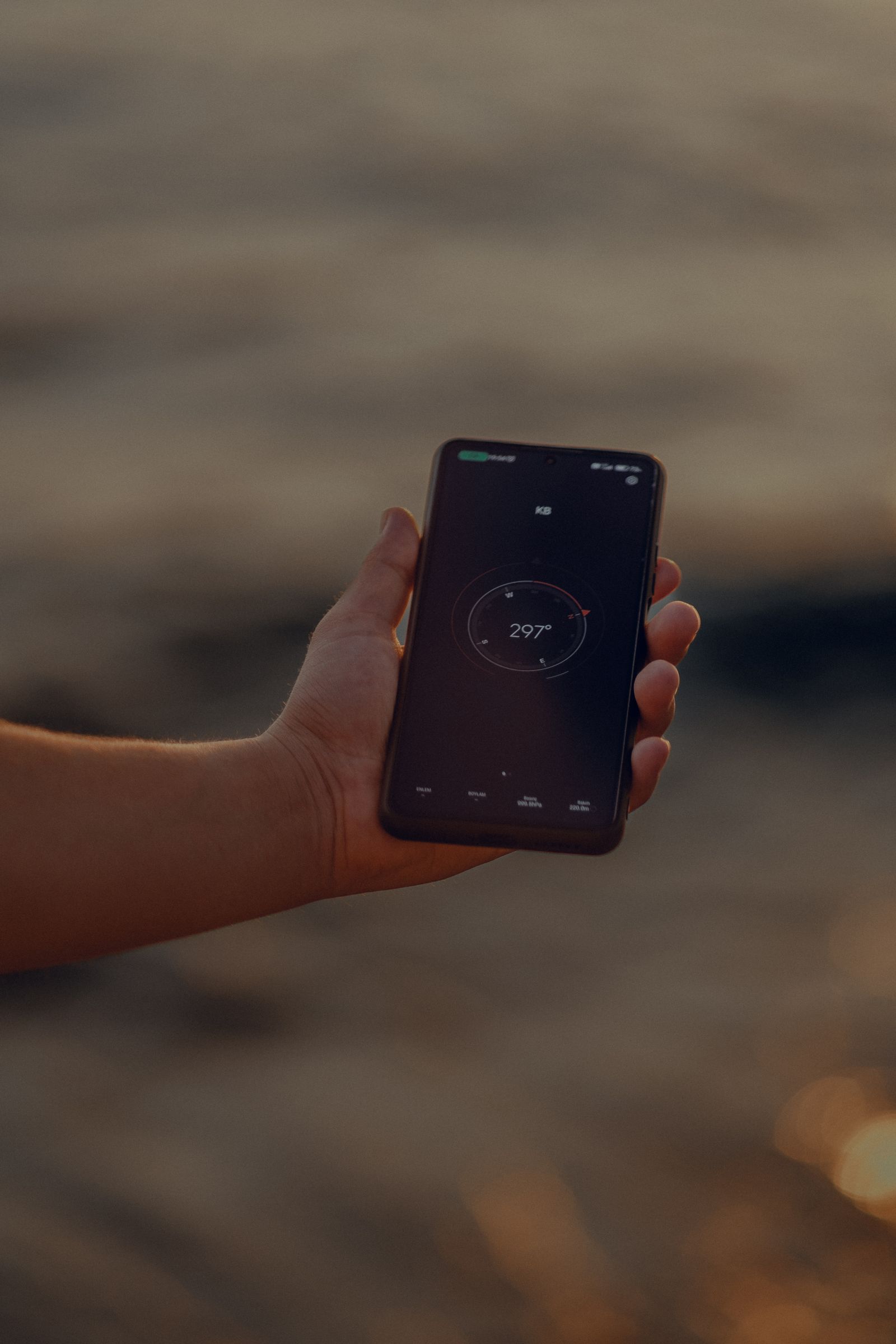
Photo: Atahan Demir / Pexels
Wrong Compass: The Three Test Diagnosis
Check off each step as you finish it. Your progress stays on this page.
0 of 6 complete
0% done
How a Phone Compass Works, Briefly
A phone has no needle. Its compass is a magnetometer, a chip that measures the strength and direction of the magnetic field around it in three axes, fused with accelerometer and gyroscope data so the phone knows which way is down and how it is being held. The software assumes the dominant field it measures is the Earth's, which at the surface runs between about 25 and 65 microtesla depending on where you stand on the planet, and points toward magnetic north. Every failure in this guide is that assumption breaking: another field stronger than the Earth's is present and the chip cannot tell the difference, or the field is the Earth's but the reference (magnetic north versus the true north your map uses) differs by your local declination, or the chip's own calibration, its model of the phone's internal magnetic clutter, has drifted. Keep the assumption in mind and the tests below read like what they are: ways of asking which part of the assumption failed.
Test One: Does the Error Travel With the Phone?
Walk the compass through three environments: indoors, then outdoors away from buildings and cars, then outdoors in an open field or park. If the heading is wrong indoors but correct in the open, the phone is healthy and the room was the problem: steel structure, wiring, speakers, radiators, and reinforced concrete all bend the local field, and no calibration performed in that room can fix a compass that must work in it. If the heading is wrong everywhere by roughly the same amount, the disturbance is traveling with the phone, and test two hunts it. If the heading is unstable, spinning, or jumping as you turn slowly, the sensor is being disturbed in real time (something magnetic is very close) or its calibration is badly off; the spin is the magnetometer watching the field change faster than the Earth ever does. This single test, three locations, five minutes, already resolves most cases, because it divides the world into environment faults, phone companion faults, and sensor faults, and each has a different cure.
Test Two: Strip the Phone's Companions
If the error travels with the phone, interrogate what travels with it. Remove the case, especially any case with a magnetic clasp, a magnetic wallet back, a kickstand ring, or MagSafe style magnets, and check the heading bare. Magnetic cases are the single most common cause of the traveling offset: the magnet sits centimeters from the magnetometer, its field dwarfs the Earth's at that distance, and the compass faithfully reports the case's north. Next, unclip the phone from car mounts with magnetic heads, move it away from power banks, earbuds cases, tablets, and laptops in your bag, and check again. Then recalibrate once, bare phone, outdoors, with the figure eight motion, and test against a known direction: a street you know runs north, the sun's position for the hour, or a landmark bearing from a map. If the compass is now true, the companion you removed was the cause, and the fix is a non magnetic case or mount, not repeated calibration. Note the trap: calibrating the phone while the magnetic case is on can make the compass accurate with that case in that orientation and worse in every other, because you have taught it a lie as its model of the world.
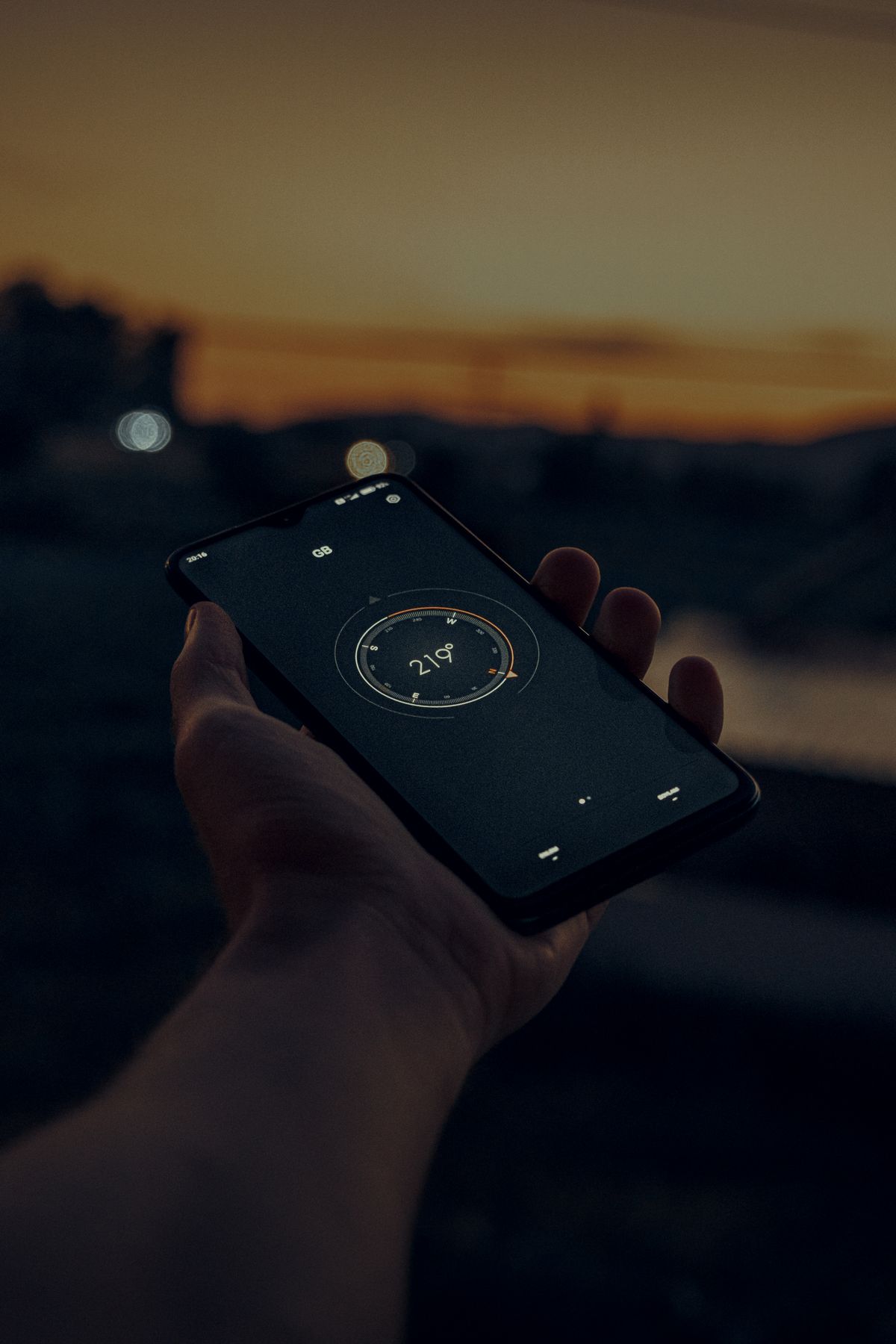
The Fixed Offset That Is Not an Error: Declination
Suppose the compass is stable, repeatable, case off, open sky, and still sits some degrees away from where the map says north is. Before condemning it, check declination: the angle between magnetic north (where every compass points) and true north (where maps are drawn), which varies by location from over 20 degrees east in some places to over 20 degrees west in others, and drifts slowly over the years. A phone compass app set to magnetic north will differ from a map's grid by exactly your declination, correctly, forever, until you switch the app to true north (a setting in most compass apps and in the iPhone Compass settings), which applies the correction from the phone's location. The symptom that identifies declination is a constant offset that matches your region's published declination value and never changes with environment or case. That is not a fault to fix but a reference to choose, and it matters practically when you transfer bearings between phone and paper map, the daily business of how to read a map and compass. Every other cause in this guide varies; declination alone is constant, which is how you know it.
The Interference Distance Table
Magnetism obeys an inverse cube law at these scales: double the distance and the disturbance falls to roughly an eighth. That is why small separations cure most interference, and why the classic land navigation manual distances, from the US Army's FM 3-25.26 tradition, are worth memorizing as orders of magnitude: keep a compass about 55 meters from high tension power lines, 18 meters from a truck, 10 meters from barbed wire, and even a steel helmet or rifle disturbs it at half a meter. Your phone's magnetometer lives under the same physics with smaller actors: a magnetic mount at zero meters is a catastrophe, the same mount's influence at arm's length is negligible, and a car body around the phone is a permanent mild disturbance that makes in car compass readings the least trustworthy of all, one reason navigation apps lean on GPS heading while moving. When in doubt, the cure is distance: step away from the suspect object and watch the needle settle, a test that costs three paces.
When It Really Is the Phone
The residual cases are genuinely the device. A magnetometer can be damaged by a hard drop or a repair, and the signature is a compass that fails every test: unstable or frozen readings in an open field, bare phone, freshly calibrated, while another phone beside it reads true. Software can also be the culprit: a stuck sensor service or a buggy app, separated from hardware by testing a second compass app and, if needed, the phone maker's diagnostic mode or a sensor readout app, which shows the magnetometer's raw microtesla values; in a clean environment the total field should sit inside the Earth's 25 to 65 range and rotate smoothly as you turn. Values pinned at extremes or a field strength far outside the Earth's range in an open field convict the hardware or its immediate magnetic environment beyond argument. If your compass shows nothing at all, no reading in any app, that is a different fault tree entirely, including the possibility that the phone has no magnetometer, and phone compass not working is its guide. The iPhone only version of the wrong heading problem, with Apple's own settings in the frame, is covered in apple phone compass not working.
Related Guides
Readers working through this topic usually need its closest companions too. These travel and outdoors map skills guides cover the neighboring ground:
- How to Read a Compass for Kids: The Belly-Button Method and Red Fred in the Shed: Teaching a child to read a compass works when the whole skill is shrunk to two rules a seven-year-old can hold: hold the compass flat at your...
- How to Read a Compass on Google Maps: The Hidden Compass, North-Up, and the Blue Beam: The compass on Google Maps hides until you need it: it appears only when the map has been rotated away from north-up, as a small red-and-white...
- How to Read a Compass on iPhone: Headings, Locked Bearings, and the Numbers at the Bottom: The Compass app on iPhone is a real magnetic compass with three extras a pocket compass cannot match: a digital heading readout, a bearing lock...
Frequently Asked Questions
Why is my phone compass pointing the wrong way?
Usually because something magnetic is near it: a magnetic case or mount, a car body, or metal and wiring in the room. Less often, the sensor needs recalibration. A constant offset in one region can also be declination, the legitimate difference between magnetic and true north, which is a setting choice, not an error.
How do I know if my case is ruining my compass?
Take the case off and compare headings in the same spot outdoors. If the bare phone reads true and the cased phone does not, the case, especially any magnetic clasp, wallet back, or magnetic ring, is the cause. Calibrating with the case on teaches the phone a wrong model and makes things worse elsewhere.
What is the difference between magnetic north and true north on my phone?
Compasses naturally point to magnetic north. Maps are drawn to true north. The angle between them at your location is declination, which can exceed 20 degrees. Compass apps offer a true north setting that corrects for it using your location; with it off, a healthy compass will still differ from the map by the declination amount.
Why does my compass spin or jump around?
The magnetometer is seeing a changing magnetic field stronger than the Earth's: something magnetic is close and moving relative to the phone, or you are inside a steel rich environment like a car or a building with heavy structure. Step into the open, remove magnetic accessories, and the spinning should stop; then recalibrate.
How far from metal do I need to be for a true reading?
Distance cures interference fast because the disturbance fades with the cube of distance. Classic field guidance: about 55 meters from high tension lines, 18 meters from a truck, 10 meters from barbed wire, and half a meter from a steel helmet or rifle. For phone accessories, arm's length is usually enough; contact distance is the problem.
Photo credits: Atahan Demir (Pexels); Atahan Demir (Pexels). Photos are served from this site; follow the credit to the library page for the original.