Every method in this guide has the same ancestor: someone, centuries before compasses were common, needing to know which way was north and having only the sky to ask. The sky still answers. But the methods differ wildly in reliability, and the folklore differs from the physics, so this guide ranks them honestly: the methods that deserve your trust first, their exact procedures, the hemisphere rulings that reverse them, the famous signs that deserve demotion, and a practice plan, because a method you have only read about is a method you do not yet have. Verify every practice attempt against your phone's compass; the phone is the teacher here, not the rival. Our map reading guide assumes a compass for its orientation work; this article is the insurance policy for the day the compass is gone.
Home / Map Skills for Travel and Outdoors
How to Find North Without a Compass: The Reliable Methods, Ranked, With a Practice Plan
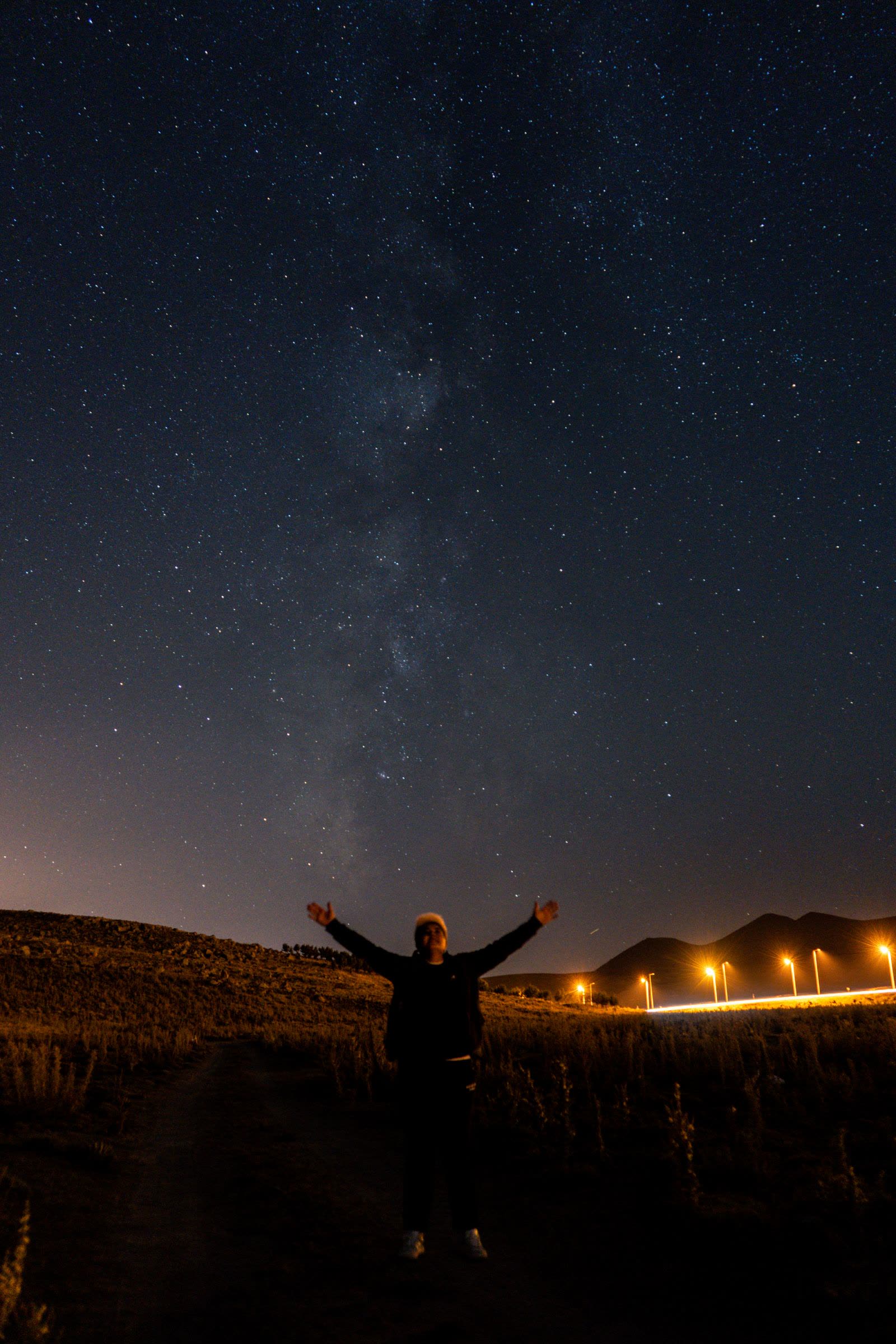
Photo: Zeynep Sude Emek / Pexels
Find North Without a Compass: Practice Checklist
Check off each step as you finish it. Your progress stays on this page.
0 of 8 complete
0% done
Method One, Daytime and Most Reliable: The Shadow Tip
The sun travels east to west across the sky, so shadows travel west to east across the ground, and the first shadow tip you mark is always the westernmost one. That single fact is a compass.
- Push a straight stick vertically into level ground in sunshine, or use any vertical object whose shadow tip you can see clearly.
- Mark the exact tip of the shadow with a stone. This first mark is west. There are no exceptions and no hemisphere ruling; the shadow always starts its day in the west.
- Wait at least 15 minutes; 30 is better. The shadow tip moves visibly eastward.
- Mark the new tip. This second mark is east of the first, always.
- Draw or imagine the line from the first mark to the second: it runs west to east.
- Stand with your left foot on the first mark (west) and your right foot on the second (east). You are facing north.
The method's accuracy improves with a longer wait and a taller stick, and it works in both hemispheres unchanged, which no other daytime method can claim. Its demands are sunshine and patience: fifteen minutes is the price of a direction you can stake a walk on. Around midday in the tropics the shadow shrinks to almost nothing and the method sulks; early morning and mid afternoon are its best hours.
Method Two, Daytime and Quick: The Analog Watch
If you wear a watch with hands, you carry a rough compass, with a hemisphere ruling that reverses the procedure.
Northern hemisphere. Hold the watch flat. Point the hour hand at the sun. The direction halfway between the hour hand and 12 o'clock is south. North is the opposite. Example: at 4 in the afternoon, the hour hand points at 4; halfway between 4 and 12, going the short way, is 2's direction; that line points south.
Southern hemisphere. Hold the watch flat. Point the 12 o'clock mark at the sun. The direction halfway between 12 and the hour hand is north.
Two honest caveats. Daylight saving time shifts the sun an hour off the watch's story; the fix is to use the halfway line between the hour hand and 1 o'clock instead of 12 during saving time, or accept the error knowingly. And near the equator the sun passes nearly overhead, the hour hand points at a glare, and the method's geometry collapses; use the shadow there. Within temperate latitudes, on a normal day, the watch gives a direction good enough to choose a trail fork, which is the standard these methods are judged by.
Method Three, Night and Exact: The North Star
On a clear northern night, the sky offers the most precise natural direction of all: Polaris, the North Star, sits within about a degree of true north, all night, every night, because it stands almost exactly over the Earth's axis.
Find it by its signpost. Locate the Big Dipper, the saucepan shape of seven bright stars. The two stars at the outer end of its bowl are the pointers. Draw a line from the lower pointer through the upper one and extend it about five times the distance between the two pointers. The next notably bright star on that line is Polaris, the end of the Little Dipper's handle. Face it and you face north, to within a degree, better than a cheap compass. A bonus check: Polaris's height above the horizon roughly equals your latitude, a fact navigators have used for a thousand years. Our night sky navigation guide goes deeper into the constellations for readers who catch the taste for this.
Method Four, Night in the Southern Hemisphere: The Southern Cross
South of the equator there is no pole star worth the name, so southern navigators built one from geometry. Find the Southern Cross, the compact kite of four bright stars. Take its long axis, the line from the star at the top of the kite through the star at the bottom, and extend it about four and a half times the cross's own length. The point you reach hangs over due south on the horizon below it. Face that point and you face south; north is squarely behind you. The method takes practice, the sky has a false cross that fools beginners, but the true cross has two bright pointer stars beside it, and they are the tell.
The Supporting Evidence: Sun Positions
Between the ranked methods sits a body of general sun knowledge worth carrying. The sun rises in the east and sets in the west, exactly so only at the equinoxes; in summer it rises north of east, in winter south of east, in the northern telling. At local midday, the sun stands due south in the northern hemisphere and due north in the southern, outside the tropics, and shadows are at their shortest. None of this is precise enough alone, but it corroborates: if your shadow tip line says north is that way and the midday sun is behind your left shoulder in a way that agrees, confidence compounds. Direction finding in the field is a jury, not a single witness.
The Demoted Signs: What Not to Trust
Moss grows on the north side of trees. In practice moss grows where moisture lingers, which is the shaded side in some forests and the wet side in others, and on all sides in a damp wood. As a sole guide it has misled more walkers than it has saved; treat it as a hint of a hint. Satellite dishes point at the equator, which in the northern hemisphere means generally southward: true, rough, and useless at any finer grain. Church and building orientations, prevailing wind bent trees, snow melting first on south facing slopes (northern hemisphere): each contains a grain of regional truth and a bushel of exceptions. The ranked methods above rest on astronomy, which does not have off days. The demoted signs rest on tendencies. In a real need, bet on astronomy.
The Backyard Practice Plan
Learn these on a calm afternoon with your phone in your pocket as the examiner, which is what the checklist above formalizes. Run the shadow tip method in your garden and check the result against the phone compass before you look. Run the watch method at two different hours. On the next clear night, find Polaris by the pointers, or the Southern Cross by its axis, and check that too. Then repeat the winning method a week later without notes. Two successful, verified repetitions convert a read method into a held skill, and the skill weighs nothing, needs no battery, and cannot be left on the kitchen counter like the compass was. It pairs naturally with the orientation habits in our reading a map guide: a map aligned to a shadow derived north is a fully working navigation system, centuries old and field proven.
The Hard Case: No Sun, No Stars
Every method above needs a visible sky, and the honest guide admits the case where the sky refuses: heavy overcast by day, clouded night, forest canopy, fog. Partial helps exist. A completely overcast sun still brightens one part of the sky, and a watch method run on the glow's center gives a rough direction, rough being the operative word. A break in the clouds, even minutes long, is enough for one shadow or one star sighting, and direction, once taken, can be held by landmarks: pick a distinctive tree or peak on your line and walk to it, then re-pick, the technique called handrailing's cousin that keeps a bearing alive without repeated sightings. Terrain helps too when a map is in hand: a river's flow direction, a ridge's known trend, a road's signed destination are orientation facts of a lower order that can corroborate a weak sky reading. And there is a legitimate final method, which is to stop: direction errors compound with distance, and waiting an hour for a sky window is cheaper than walking an hour wrong. The ranked methods are astronomy; the hard case is judgment, and knowing that the correct move is sometimes patience is part of carrying the skill rather than merely the facts.
Related Guides
Readers working through this topic usually need its closest companions too. These travel and outdoors map skills guides cover the neighboring ground:
- How to Find North With a Compass: The One Task, Done Exactly: Finding north with a compass is a single task with a short procedure and a long list of ways to spoil it.
- How to Find Elevation on onX: Readouts, Contours, Elevation Bands, and Profiles: onX answers the elevation question on more surfaces than most users ever open: the current-location readout pairs your coordinates with your...
- How to Use a Compass Without a Map: Bearings, Back Bearings, and Dead Reckoning: A compass without a map cannot tell you where you are, but it can do the two jobs that matter off trail: hold a direction across featureless...
Frequently Asked Questions
What is the most reliable way to find north without a compass?
By day, the shadow tip method: mark a shadow's tip, wait at least 15 minutes, mark it again; the first mark is west, the second east, and standing with your left foot on the first and right foot on the second, you face north. By night in the northern hemisphere, Polaris, found by extending the Big Dipper's pointer stars about five times their spacing, sits within about a degree of true north.
How does the analog watch compass trick work?
In the northern hemisphere, hold the watch flat, point the hour hand at the sun, and the line halfway between the hour hand and 12 points south; north is opposite. In the southern hemisphere, point 12 at the sun instead, and the halfway line between 12 and the hour hand points north. During daylight saving time, use 1 o'clock in place of 12, or accept a small error.
Does the shadow method work in the southern hemisphere?
Yes, unchanged, and it is the only daytime method that does. Shadows always travel west to east, so the first mark is always the western one, and standing with your left foot on the first mark and your right on the second faces you north in either hemisphere. The watch method, by contrast, reverses its procedure between hemispheres.
Can I find north from the stars in the southern hemisphere?
Yes, by construction rather than by a pole star. Extend the Southern Cross's long axis about four and a half times its length; the point reached stands over due south, so north is directly behind you. Beware the false cross, a similar but larger and dimmer kite; the true cross has two bright pointer stars alongside it.
Is it true that moss grows on the north side of trees?
Not reliably. Moss grows where moisture and shade persist, which varies with the forest, the slope, and the weather. It is folklore with a grain of statistical truth in some northern forests and none worth navigating by. The astronomical methods in this article, shadow, watch, and stars, rest on geometry that does not vary by woodland.
How accurate are these methods compared to a compass?
Polaris is the champion: within about a degree of true north, comparable to a decent compass. The shadow tip method, done patiently with a long wait, is good to a few degrees. The watch method is rough, several degrees to over ten depending on time of day and latitude, fine for choosing a direction of travel, not for a bearing. All three beat a guess, which is the alternative they exist to replace.
Photo credits: Zeynep Sude Emek (Pexels); Gül Işık (Pexels). Photos are served from this site; follow the credit to the library page for the original.