Our main guide to finding north without a compass teaches the classic methods where most readers live: a sun that crosses the southern sky and a Pole Star that sits over north. Cross the equator and the sky turns around. The sun transits the northern sky, shadows at noon point south, the watch trick reverses, and there is no bright pole star at all over the south celestial pole. Travelers who apply northern instructions in Australia, New Zealand, South Africa, or South America will find a confident, wrong answer. This guide is the mirrored edition, method by method, including the trap that catches the most people: the Southern Cross has an impostor.
Home / Map Skills for Travel and Outdoors
How to Find North Without a Compass in the Southern Hemisphere
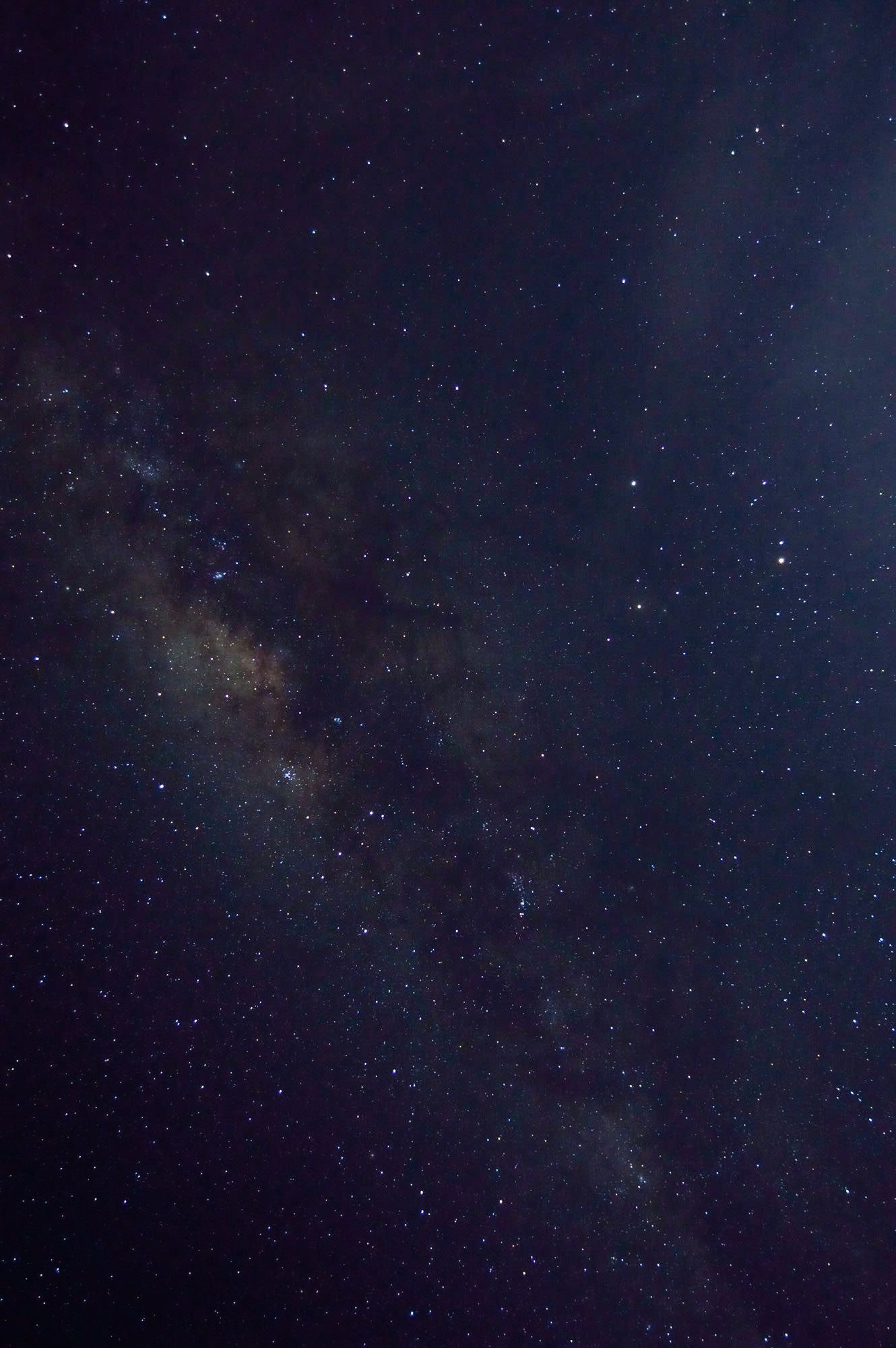
Photo: Shay Wood / Pexels
Interactive tool
Find North Down Under: The Mirrored Methods
Check off each step as you finish it. Your progress stays on this page.
0 of 7 complete
0% done
The Sun's Path: Everything Follows From This
In the southern hemisphere's temperate zones, the sun still rises in the east and sets in the west, but it crosses the sky through the north. At solar noon it stands to the north (exactly how far north depends on your latitude and the season), and shadows at noon therefore point south. Memorize that single picture and every method in this article becomes a variation: find south from the sun or the stars, and north is simply the opposite direction. Southern methods are usually taught as "find south first," and that is not a quirk; it is the geometry. The sun gives you south at noon, the Southern Cross gives you south at night, and the watch method below is arranged to read north directly only because the dial is turned around.
The Shadow-Tip Method: Same Line, Opposite Side
The classic shadow method works unchanged in its mechanics, and this is where a popular claim needs correcting. Plant a stick, mark the tip of its shadow, wait 10 to 15 minutes, and mark the new tip. Some southern-hemisphere advice claims the shadow tip travels the opposite way down there. It does not. The shadow tip travels from west to east in both hemispheres, because the sun's apparent motion is east to west everywhere on Earth. Your first mark is the west end of the line and your second mark is the east end, in Sydney exactly as in Seattle.
What flips is where north lies relative to the line. Stand as the northern instructions say, left foot on the first (west) mark and right foot on the second (east) mark: in the northern hemisphere you face north, but in the southern hemisphere you face south, and north is behind you. The line is the same; the side that is north has swapped. Get the line, then take north as the direction opposite to the one a northern guide would give you, and confirm with the noon rule if the timing allows: the shortest shadow of the day points south, so the direction 180 degrees from a midday shadow is north, no stick-waiting required.
The Watch Method, Reversed
An analog watch can still find direction, but the southern procedure is the mirror of the northern one:
- Hold the watch level and point the 12 o'clock mark at the sun (in the northern method you point the hour hand; here it is the 12).
- Find the line that bisects the angle between the 12 and the hour hand.
- That bisector points north.
Reset the reading about once an hour as the sun moves, expect accuracy to degrade near the equator and near noon (when the sun is nearly overhead and its direction is ill-defined), and remember the usual watch-method caveats: use solar time sensibly, so if your watch is on daylight saving, the bisector shifts; many southern walkers subtract the hour mentally by using the 1 o'clock position as the reference instead. Treat the watch as a fair-weather estimator, good for choosing a ridge line or a road direction, not for threading a needle.
The Southern Cross: Finding South at Night
There is no southern Polaris. The star nearest the south celestial pole is faint and useless to the naked eye in practice, so southern navigators use the Southern Cross (Crux), and the method has two stages:
- The long axis extension. Identify the Cross and its long axis, from Gacrux at the top to Acrux at the bottom. Extend that line about 4.5 times the length of the axis beyond Acrux. The point you reach is very near the south celestial pole.
- The pointer stars refinement. The two bright Pointer stars, Alpha and Beta Centauri, trail the Cross across the sky. Draw the perpendicular bisector of the line between the Pointers (the line that cuts it at right angles through its midpoint) and extend it until it meets your extended Cross axis. The intersection is the pole, more precisely than the 4.5-times rule alone.
From the pole point, drop straight down to the horizon: that is south. Turn around for north. Two virtues make this the premier southern night method: the Cross is up for much of the year from southern latitudes, and the pole does not move, so unlike sun methods it works the same at 9 p.m. and 3 a.m. Practice it on a clear night at home, where a compass app can grade you, before you need it in the field.
The False Cross: The Trap With a Name
The sky plants a decoy. The False Cross, an asterism in the constellations Vela and Carina, looks like the Southern Cross at a glance and has misled real navigators. Tell them apart: the False Cross is larger and dimmer, its stars are more evenly spaced, and crucially it has no Pointer stars attending it and no fifth star in the pattern (the true Cross has a fifth, fainter star, Epsilon Crucis, tucked under one arm). If the "Cross" you found has no two bright Pointers nearby pointing at it, you are looking at the impostor, and any south you derive from it will be wrong by a wide margin. Checking for the Pointers is not pedantry; it is the verification step that separates the method from the trap.
Two Supporting Methods: Orion and the Crescent Moon
Orion's belt straddles the celestial equator, so its stars rise due east and set due west from everywhere on Earth, southern hemisphere included. In southern skies Orion appears upside down compared to northern postcards, which unsettles people, but the geometry is unbothered: watch where the belt rises or sets and you have the east-west line, with north at right angles to it, on the side away from the midday sun's path. The crescent moon offers a rough check: draw the line through the crescent's two horns and extend it to the horizon. In northern skies that construction indicates roughly south; in southern skies the mirrored geometry makes it indicate roughly north. It is the least precise method in this article (the moon's tilt varies with season and hour), so use it to corroborate, never to decide.
Putting It Together, and Knowing the Limits
The southern navigator's hierarchy mirrors the northern one. By day: the noon shadow for a direct south (and therefore north), the shadow-tip line when the hour is awkward, the watch for a quick estimate. By night: the Southern Cross with the Pointer refinement, verified against the False Cross, with Orion's rising and setting as the east-west check. All of them degrade near the equator, where the sun passes nearly overhead and the Cross rides low, and all of them assume you can see the sun or the stars at all. In forest, fog, or a gorge, no sky method works, which is why these skills are the backup layer under a compass and a downloaded map rather than a replacement for either. Learn them on clear evenings at home, where being wrong costs nothing, and they will be there on the one trip where being right is the whole game.
Latitude Changes the Picture: Tropics and the Far South
Two edge zones bend the rules and are worth knowing before you travel into them. Between the tropics (roughly 23.5 degrees either side of the equator), the noon sun is not reliably in the northern sky for a southern traveler: at latitudes between the equator and the Tropic of Capricorn, there are seasons when the midday sun stands to the south or directly overhead, because the sun's declination swings past your latitude during the year. The shadow methods still work (the geometry never lies), but the memorized rule "noon shadow points south" only holds when the sun is actually north of you, so in the tropics, derive direction from the shadow-tip line and the Cross rather than from slogans, and expect watch readings near noon to wobble when the sun is near the zenith. In the far south (southern New Zealand, Patagonia, Tasmania on a good night), the picture simplifies beautifully: the Southern Cross is circumpolar, never setting, wheeling around the pole through the night and the year. You can take a Cross bearing at dusk, again at midnight, and again before dawn, and the pole stays exactly where the method put it. The far south also stretches twilight, which stretches the hours when neither sun methods nor star methods are clean; plan the day's navigation decisions for full light or full dark, and treat the long twilights as estimation time, not measurement time.
Related Guides
Readers working through this topic usually need its closest companions too. These travel and outdoors map skills guides cover the neighboring ground:
- How to Find North With a Compass: The One Task, Done Exactly: Finding north with a compass is a single task with a short procedure and a long list of ways to spoil it.
- How to Read a Compass on Google Maps: The Hidden Compass, North-Up, and the Blue Beam: The compass on Google Maps hides until you need it: it appears only when the map has been rotated away from north-up, as a small red-and-white...
- How to Use a Compass Bezel on a Watch: The Seiko Method, Both Hemispheres: A compass bezel turns an ordinary analog watch into a sun compass, if you know the setting ritual: point the hour hand at the sun, put the south...
Frequently Asked Questions
How do I find north in the southern hemisphere during the day?
Use the sun. At solar noon the sun is in the northern sky and shadows point south, so north is opposite the midday shadow. At other hours, use the shadow-tip method (first mark west, second east) and remember north lies on the opposite side of the line from the northern-hemisphere rule, or use the reversed watch method.
How does the watch method work in the southern hemisphere?
Point the 12 o'clock mark at the sun, then bisect the angle between the 12 and the hour hand. That bisector points north. It is the mirror image of the northern method, which points the hour hand at the sun and reads south.
How do I find south with the Southern Cross?
Extend the long axis of the Cross (Gacrux to Acrux) about 4.5 times its length to reach the south celestial pole, refining with the perpendicular bisector of the two Pointer stars. Drop vertically from the pole to the horizon for south; north is directly opposite.
What is the False Cross and why does it matter?
It is a larger, dimmer cross-shaped asterism in Vela and Carina that mimics the Southern Cross. It lacks the Pointer stars and the Cross's fifth star. Navigating from it gives a badly wrong south, so always confirm the Pointers before trusting a Cross sighting.
Does the shadow really move the other way in the southern hemisphere?
No. That claim is a myth. The shadow tip travels west to east in both hemispheres. What changes is which side of the west-east line north lies on: stand with your left foot on the west mark and right foot on the east mark and a southern observer faces south, not north.
Photo credits: Shay Wood (Pexels); Kai Pilger (Pexels). Photos are served from this site; follow the credit to the library page for the original.