Most road trip plans treat fuel as an afterthought, a gauge to glance at somewhere past the halfway point. That works until the day it does not: the long empty stretch, the closed station, the headwind that ate your margin. Planning gas stops properly is a small discipline with two halves that the tools split between them. App planners place stops and show prices along the route; calculators do fuel math. Nobody joins the halves for you, so this guide does: the range rule for placing stops, the arithmetic for costing them, and one worked trip that runs both. For the wider trip method this fuel layer plugs into, nights first and drives following, see our road trip planner; this article owns only the fuel.
Home / Map Skills for Travel and Outdoors
Road Trip Planner With Gas Stops: Place Stops by Range, Then Cost Them by the Tank
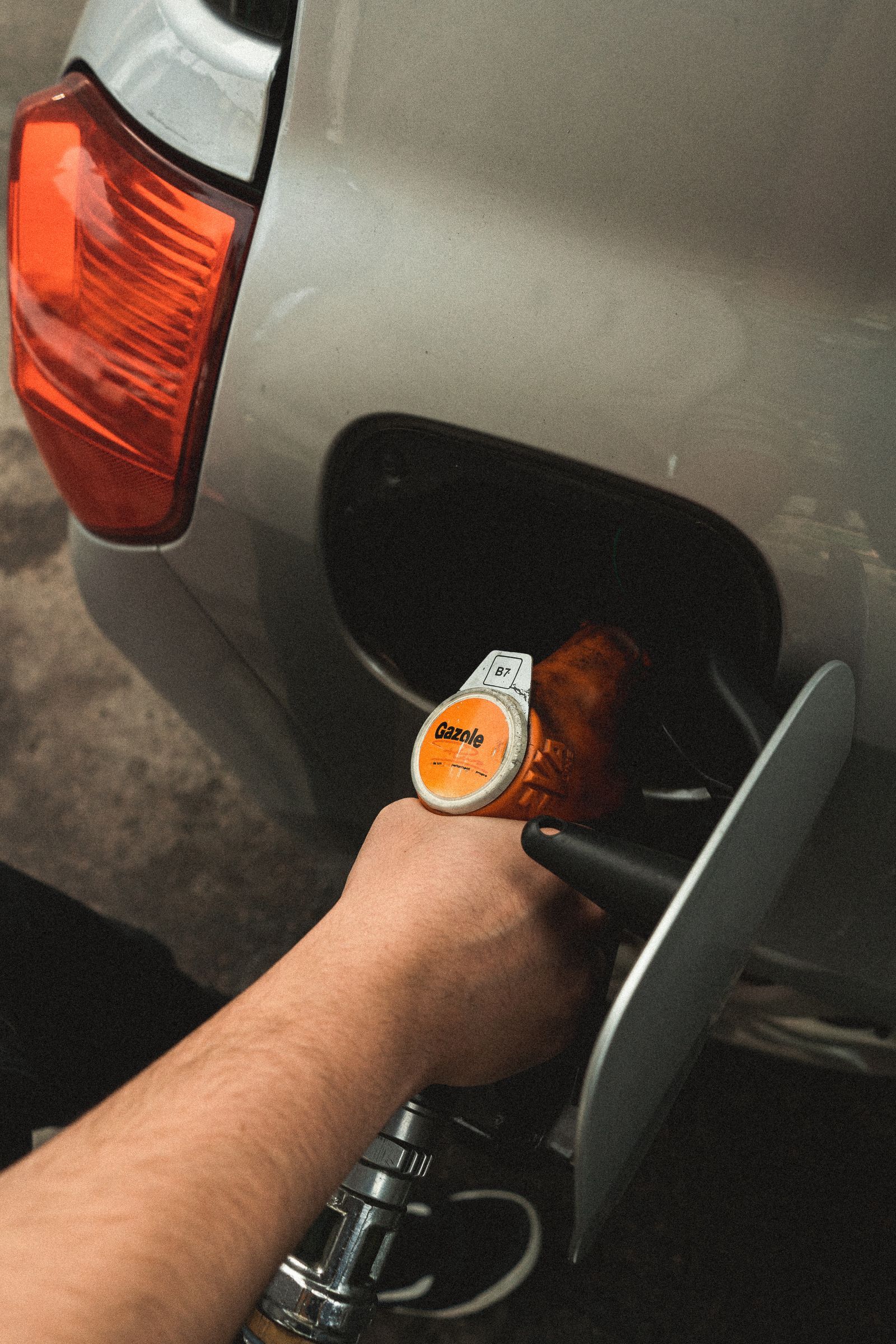
Photo: Luca Nardone / Pexels
Interactive tool
Place the Fuel Stops: Range First, Then Cost
Check off each step as you finish it. Your progress stays on this page.
0 of 6 complete
0% done
Half One: Place Stops by Range, Not by Hope
Your car's real planning number is not its tank size; it is its usable range: the distance you can actually drive between fills with a sane reserve kept in hand. Build it from three figures you can get honestly:
- Tank capacity, from the manual, in gallons or liters.
- Your real economy, from your last few fills (distance driven divided by fuel bought), not the brochure figure, which was measured on a dyno by optimists.
- A reserve you refuse to spend, conventionally the last quarter tank, which exists for closed stations, detours, and the stretch that turns out longer than the sign said.
Usable range is (tank minus reserve) multiplied by economy. A 14 gallon tank at 30 mpg is a 420 mile headline range and a 315 mile usable range with a quarter tank held back. The planning rule that follows: place each fuel stop at or before 75 percent of usable range along the route, roughly every 235 miles in this example, and treat anything past usable range as not a plan but a gamble. On sparse western highways and mountain routes, tighten further: the map distance between stations is fixed, and your stops must land on stations that exist, so plan backward from the emptiest stretch of the route, not forward from the start.
Half Two: Cost the Trip by the Tank
The costing formula is the mirror of the range formula:
Total fuel = total route miles ÷ your real economy. Multiply by the price you expect to pay per gallon and you have the trip's fuel budget.
The worked example: a 1,450 mile round trip at a real 30 mpg burns about 48 gallons. At prices read along the route, that is the fuel line of the trip budget, neither the guess most people carry nor the shock they meet at the third fill. Per stop, expect to buy roughly three quarters of a tank if you follow the reserve rule, which makes each stop's cost predictable too. Two honest warnings belong here. Economy falls with speed, load, roof boxes, and headwinds, so a winter highway trip at 75 mph will not see the 30 mpg your summer commuting produced; derate by a tenth for planning and be pleasantly surprised. And prices vary by state and by distance from the highway exit, sometimes by enough per gallon that one planned stop moved two exits earlier pays for a coffee. Planners with price overlays exist to exploit exactly that spread.
The Planners: What the Apps Actually Do
AAA TripTik, the veteran of the category, builds the route and overlays fuel: stations along your path with their prices, woven into a planner that also handles hotels and attractions, and it lets you add stops to the itinerary (the planner supports roughly two dozen stops in a route, which is more than any sane fuel plan needs). Google Maps answers the same need less formally: search "gas stations along route" during navigation and it lists stations on your path with prices where it has them, and its saved places and stops features assemble the plan by hand. Dedicated fuel calculators, the second family in the search results, do none of the geography and all of the arithmetic: distance, economy, tank, price in; stops and cost out.
The working combination this guide recommends: place the route and the candidate stations in a planner with a price overlay, then run the range rule over it yourself, because no planner knows your reserve discipline, and the calculator's math to sanity check the total. Apps show you stations. The 75 percent rule tells you which ones are yours. One subject this guide deliberately leaves alone: the subscription pricing of planning apps changes and is rarely the deciding factor; the fuel math below outlives any app's price page, and the route does not care what the planner cost.
One Worked Trip, Both Halves
Denver to Salt Lake City and back, about 1,060 highway miles round trip, in the example car: 14 gallon tank, real economy 28 mpg at highway speed (derated), reserve a quarter tank. Usable range: 10.5 gallons × 28 = 294 miles; stops planned at or before 220 miles of driving. Westbound legs: Denver to Glenwood Springs (about 157 miles), fill; Glenwood to Green River (about 185 miles), fill; Green River to Salt Lake City (about 182 miles), arrive with the reserve intact. Eastbound mirrors it. Fuel total: 1,060 ÷ 28 ≈ 38 gallons for the trip, bought in four planned stops of roughly 9 to 10 gallons each, each at a town chosen in advance rather than a gauge discovered in a canyon. Nothing about that plan is clever, and that is the point: fuel stops planned by range are boring, and boring is what a fuel plan is for. The driving in between gets to be the interesting part, which is what the trip was supposed to be.
Fuel Stops Are Also Human Stops
A fuel plan drawn purely by range ignores the cargo. Drivers need a break roughly every two hours regardless of what the tank says, passengers need them more often, and the cheapest trip is not the one with the fewest stops but the one where nobody arrives destroyed. The range rule and the human rule reconcile easily: your stop interval is whichever comes first, the 75 percent fuel point or the two hour point, and on most highway cars the two hour point comes first, which means the fuel plan usually has slack in it. Use that slack deliberately. A stop that combines fuel, food, a walk, and a driver swap is worth ten minutes more than a splash and dash at a bleaker exit, and arriving with the reserve untouched is what buys you the freedom to choose the pleasant stop over the desperate one. The reserve, in other words, is not only mechanical insurance. It is scheduling freedom, purchased in advance at the price of one extra fill per trip.
Sparse Country Rules
Everything in this guide tightens where stations thin out, and three habits separate experienced sparse country drivers from cautionary tales. Fill in the last real town, even at half a tank, whenever the map ahead shows a long empty stretch; the top half of the tank is the cheapest insurance you will ever buy. Treat the map's station icons as claims, not facts: rural stations close, change hours, and lose their pumps, and a station that exists in an app may be a building with a handwritten sign. Where the gap is long, the previous stop's receipt is worth more than the next stop's listing. Recalculate economy honestly in mountains and wind: climbing and headwinds can cut real economy by a quarter, and the range rule only protects you if the economy figure fed into it was true. Derate first, then plan, and let a tailwind hand you back a longer leg as a bonus rather than a plan.
Measure Your Real Economy Before the Trip
Everything in this guide hangs on one input, your real fuel economy, and most drivers carry a number for it that came from the car's optimistic dashboard or the brochure. The honest measurement is the brim to brim method, and it takes two ordinary fills. Fill the tank until the pump clicks off and reset the trip odometer. Drive normally. At the next fill, fill to the same click, and note the gallons it took and the miles on the trip meter. Divide miles by gallons: that is your real economy, measured over real roads with your real right foot. Repeat once more and average the two for stability. The figure will usually sit below the dashboard's claim and well below the brochure's, and that gap is not bad news; it is the difference between a fuel plan and a fuel hope. Feed the honest number into the range rule and the cost formula, derate it a tenth for fast loaded highway work, and the arithmetic in this article becomes a description of your trip instead of a genre of fiction.
The Fuel Plan, on One Card
Pin the method where you will see it during the drive. Tonight: measure or recall your real economy, compute usable range (tank minus a quarter, times economy), and mark stops at 75 percent of it on the route your planner drew, favoring real towns before empty stretches. Morning: glance at the price overlay and shift a stop an exit or two if the spread rewards it. On the road: fill at the planned stops, keep the reserve sacred, and let the two hour human rule pull stops earlier whenever it wants to. That is the entire system, planner for the geography, arithmetic for the truth, reserve for the surprises, and it scales from a three hour drive to a cross country migration without changing a single rule.
Related Guides
Readers working through this topic usually need its closest companions too. These travel and outdoors map skills guides cover the neighboring ground:
- Road Trip Planner With Gas Cost: Budget the Drive Before You Turn the Key: A road trip budget stands or falls on one equation: fuel cost equals distance divided by economy, multiplied by price.
- Road Trip Planner Apps: Roadtrippers, Furkot, Wanderlog, and the Right Tool for Discovery vs Logistics: Road trip planner apps split into two species that roundups constantly confuse: discovery tools that find interesting stops along your route, and...
- Route Planner for Multiple Stops: When to Let an Optimizer Order Your Stops, and When Your Own Order Wins: Google Maps will happily route nine stops in exactly the order you typed them, including the wasteful one.
Frequently Asked Questions
How often should I stop for gas on a road trip?
Plan stops by range, not by time: at or before 75 percent of your usable range, where usable range is your tank minus a quarter tank reserve, multiplied by your real fuel economy. For a typical car that lands every 200 to 300 miles of highway driving. On sparse routes, plan backward from the longest station gap so a stop always lands before it.
How do I calculate the fuel cost of a road trip?
Divide the total route miles by your real miles per gallon to get total gallons, then multiply by the price per gallon you expect along the route. Use your measured economy from recent fills, and derate it by about a tenth for fast, loaded, or winter highway driving. That figure is the fuel budget line for the trip.
What does AAA TripTik do for fuel planning?
TripTik builds your route in the AAA planner and overlays gas stations along it with their prices, so you can choose stops by location and price together and save them into the itinerary alongside hotels and attractions. It handles the geography and the prices; you still supply the discipline of how far you are willing to run between stops.
Why keep a quarter tank reserve in the plan?
Because the plan meets reality at the worst moment: a closed station, a detour, a headwind, a stretch longer than advertised. A quarter tank reserve converts each of those from an emergency into an inconvenience. Planning to the last gallon means the first surprise owns you; planning to 75 percent of usable range means surprises are already paid for.
Is it cheaper to fill up before a long empty stretch?
Usually yes, in two currencies. Stations in sparse areas price for captivity, so filling in the last real town is often cheaper per gallon; and it buys the reserve that the range rule wants in hand before the gap. The combination, cheaper fuel and a fuller tank entering the emptiest miles, is the easiest win in fuel planning.
Photo credits: Luca Nardone (Pexels); Volker Thimm (Pexels). Photos are served from this site; follow the credit to the library page for the original.