Two lines on a plane do one of three things: they cross at exactly one point, they run parallel and never meet, or they are secretly the same line and meet everywhere. School algebra asks for "the point of intersection" as if the first outcome were guaranteed, and the complete skill includes recognizing all three. The crossing point, when it exists, has one defining property: its coordinates satisfy both equations simultaneously, because it lies on both lines. Finding it is therefore not a graphing trick but a solving act, and this guide teaches the two methods that cover nearly every problem, substitution and elimination, proves them against each other on one example, and then handles the special cases like the answers they are.
Home / Coordinates and Location Formats
How to Find the Coordinates of the Point of Intersection of Two Lines
Photo: Michael Kanivetsky / Pexels
Interactive tool
Find the Crossing Point: The Method Checklist
Check off each step as you finish it. Your progress stays on this page.
0 of 6 complete
0% done
The Idea: One Point, Two Equations
Write the lines as equations in x and y. A point (x, y) is on the first line if its coordinates make the first equation true, and on the second line if they make the second true. The intersection is the point making both true at once, which is precisely what solving a system of two equations means. That is the whole theory; everything after this paragraph is technique for extracting the pair. It also explains the special cases before any algebra: if no pair of numbers can satisfy both equations, the lines do not meet, and they are parallel; if every pair satisfying one satisfies the other, the equations describe the same line. Keep the idea in view and the methods below stop being rituals: each is just a strategy for cornering the one pair that makes two statements true together.
Method One: Substitution
Substitution works best when one equation already hands you a variable nearly isolated. Take the system: y = 2x + 1, and x + y = 7. The first equation is y expressed in terms of x, so substitute that expression into the second equation wherever y appears: x + (2x + 1) = 7. Now it is one equation in one unknown: 3x + 1 = 7, so 3x = 6 and x = 2. Return to the isolated expression for the other coordinate: y = 2(2) + 1 = 5. The point of intersection is (2, 5). Check it in the equation you did not use for the final step: x + y = 2 + 5 = 7, true. The check is not ceremony; it is the definition from the first section, applied. Substitution's craft is choosing which variable to isolate: pick the one with coefficient 1 or -1 if there is one, because isolating anything else manufactures fractions at the first step and invites arithmetic errors downstream.
Method Two: Elimination, on the Same Problem
Elimination attacks the same system from the other side, and using it on the identical problem lets you watch two methods certify each other. Rewrite the first equation in standard form: 2x - y = -1. The system is now 2x - y = -1 and x + y = 7. The y coefficients are opposites, -1 and +1, so add the equations straight down: 3x = 6, and x = 2, exactly as before. Substitute back into either original to get y = 5. Point: (2, 5). When the coefficients are not already opposed, you manufacture the opposition: multiply one or both equations by constants so that one variable's coefficients become equal and opposite, then add to eliminate it. Suppose the system were 3x + 2y = 16 and 5x - 2y = 8: the y terms already cancel on addition, giving 8x = 24, x = 3, and then 9 + 2y = 16 yields y = 3.5, point (3, 3.5). Elimination scales better than substitution when both equations arrive in standard form with no friendly coefficient 1, which is most textbook systems and nearly all real ones. The professional habit: glance at both equations, choose the method that creates the fewest fractions, and always close with the two-equation check.
The Determinant Formula: For Ugly Coefficients and Code
When coefficients are decimals, parameters, or simply hostile, a closed formula finishes the job in one pass. For the system a1x + b1y = c1 and a2x + b2y = c2, define D = a1b2 - a2b1. If D is not zero, the intersection is x = (c1b2 - c2b1) / D and y = (a1c2 - a2c1) / D. This is Cramer's rule for two equations, and it is less a method to memorize than a machine to trust: substitution and elimination are this formula performed slowly. Its real value is diagnostic. D is built from the left-hand coefficients alone, and D = 0 is exactly the condition for the special cases: the lines' directions are proportional, so they are parallel or coincident. Anyone writing code that intersects lines, in a game, a CAD tool, or a GIS, computes D first, because dividing by it blindly is how software divides by zero at the worst moment. Our sibling guide on finding the coordinates of the vertex makes a nice companion: there, one formula locates a parabola's turning point; here, one determinant decides whether two lines meet at all.
Special Case One: Parallel Lines, No Intersection
Take y = 2x + 1 and y = 2x - 3. Same slope, different intercepts: parallel lines, and the algebra knows it. Substitute and you get 2x + 1 = 2x - 3, which collapses to 1 = -3, a false statement with no x left in it. Elimination produces the same ghost: subtracting gives 0 = 4. The correct answer to "find the point of intersection" for this pair is that there is none, stated plainly, not a tortured hunt for a point the geometry says cannot exist. In standard form, the tell is proportional left sides with a non-proportional right side: 2x - y = -1 and 4x - 2y = 6 double the first equation's left but not its right. Train yourself to spot doubled coefficients early; the system is telling you its answer before you spend any algebra on it.
Special Case Two: Coincident Lines, Every Point Is the Intersection
Take x + y = 7 and 2x + 2y = 14. The second equation is the first one doubled, in full, both sides: same line wearing a scalar multiple. Substitution or elimination collapses to an identity like 0 = 0 or 7 = 7, true for everything, which is the algebra reporting infinitely many solutions. The correct statement of the answer: the lines coincide, and every point on x + y = 7 is a point of intersection; if a single representative is wanted, pick any convenient one, such as (0, 7) or (7, 0). Textbooks sometimes dress this as failure, but in applied work it carries information: two constraints that turn out to be the same constraint, two routes that are one route, two conditions a design must satisfy that secretly agree. Recognizing coincidence is recognizing redundancy, and redundancy recognized is a system understood better than before.
Graphing as a Check, Not a Method
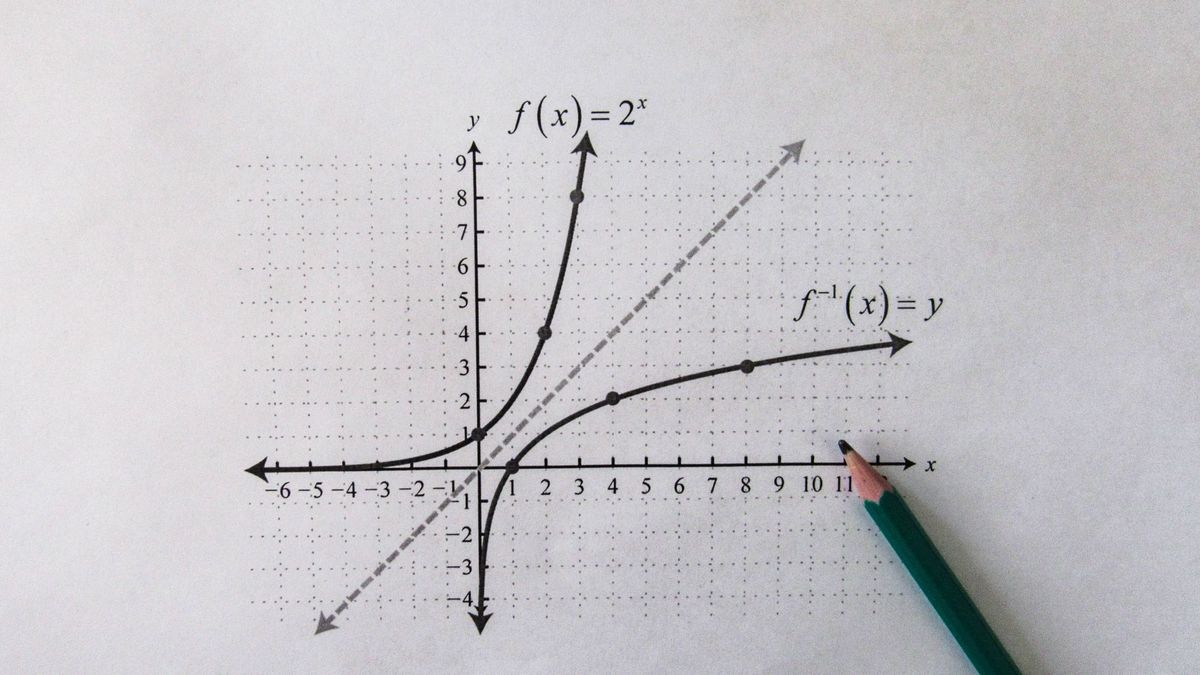
A graph is a wonderful witness and a poor calculator. Plotting both lines shows the crossing region at a glance, confirms which special case you are in, and catches gross errors, a point claimed at (2, 5) for lines that visibly cross at (5, 2) has its coordinates swapped, the single most common transcription error in this whole topic. But reading coordinates off a graph is estimation: fine for integers on grid paper, hopeless for (3, 3.5) and worse for (2.37, -1.84). The professional order of operations is algebra first, graph as audit, substitution check as the seal. There is also a conceptual dividend to graphing once per problem type: watching substitution's isolated line and elimination's combined line both pass through the same point turns three procedures into one picture, and the picture is what you will remember in five years when the procedures need refreshing.
Where This Skill Gets Used
Intersection is the atom of a hundred applied problems. Two pricing plans cross at the usage level where the cheaper plan changes; that break-even point is an intersection, found by exactly these methods. Two moving objects' position equations intersect at the meeting time and place, or refuse to, in the parallel case that means a chase that never closes. In computing, line intersection tests sit inside collision detection, ray tracing, and map software that decides whether two roads cross or one passes over the other. Even the coordinates work elsewhere on this site rests on it: a grid reference is, at heart, the intersection of an easting line and a northing line read off a map. Learn the two methods and the two special cases here, on clean numbers, and you own the move wherever it resurfaces wearing a costume.
Related Guides
Readers working through this topic usually need its closest companions too. These coordinates guides cover the neighboring ground:
- How to Find Coordinates on the Unit Circle: Build Every Point From Two Triangles: Every coordinate on the unit circle comes from one rule and two triangles.
- Convert Latitude and Longitude to State Plane Coordinates: Zones, Feet, and One Verified Example: State Plane is the coordinate system American surveying, engineering, and land records actually run on: flat grids, in feet, one zone at a time.
- GPS Coordinates App for Android: What to Look For, and the Settings That Matter More: Android already knows your coordinates; the right app just shows them well.
Frequently Asked Questions
What is the point of intersection of two lines?
It is the single point that lies on both lines, whose coordinates satisfy both equations at once. For most pairs of lines there is exactly one. Parallel lines have none, and coincident lines, the same line written twice, share all of their points.
Which method should I use, substitution or elimination?
Use substitution when one variable is already isolated or has a coefficient of 1 or -1, so you can isolate it without fractions. Use elimination when both equations are in standard form, since you can add or subtract to cancel a variable directly. Both give the same point; choose the one that creates less arithmetic.
How do I check my intersection point?
Substitute the point into both original equations. It must make each one true. This check is the definition of the intersection applied directly, and it catches the two common errors: swapped coordinates and arithmetic slips. If a point satisfies only one equation, it lies on only one line.
What does it mean when the algebra gives 0 = 0 or 1 = -3?
A false statement with the variables gone, like 1 = -3, means no solution: the lines are parallel and never meet. A true identity like 0 = 0 means infinitely many solutions: the equations describe the same line, so every point on it is an intersection. Both are complete answers, not errors.
Can two lines intersect at two points?
No. A straight line is determined by any two of its points, so if two lines shared two points they would be the same line everywhere. Distinct straight lines meet at most once. Curves are another matter: a line can cross a parabola twice, and two circles can meet at two points.
Photo credits: Michael Kanivetsky (Pexels); Sergey Meshkov (Pexels). Photos are served from this site; follow the credit to the library page for the original.